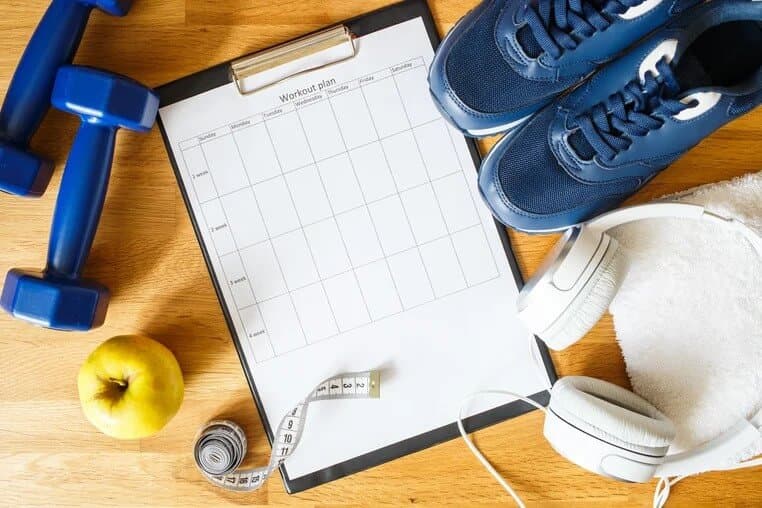
Walk into any gym and observe the lifters who consistently make progress year after year. They all have one thing in common: they track their workouts. Whether it's a notebook, a spreadsheet, or an app, the act of recording what you did — and using that data to inform what you'll do next — separates the people who transform their bodies from those who spin their wheels indefinitely.
Why Tracking Matters
Progressive overload requires data: You can't progressively overload if you don't know what you did last time. Did you bench 185 for 3x8 or 3x7? The answer determines whether you add weight or chase one more rep.
Accountability: When you see your log, you can't lie to yourself about skipping workouts or phoning in sessions. The data is honest even when your memory isn't.
Pattern recognition: Over weeks and months, your training log reveals patterns: exercises that correlate with strength gains, rep ranges your body responds to, and early signs of overtraining.
What to Track
At minimum: Exercise name, weight, sets, and reps for every working set. This is non-negotiable.
Ideally also: RPE per set, body weight, sleep quality, and session notes (how you felt, any pain or discomfort).
Optional but powerful: Exercise-specific notes (grip width, foot placement, tempo), rest periods, and time of day.
How to Track Effectively
Record during the workout: Don't try to remember everything after the session. Log each set immediately after completing it.
Review before your next session: Spend 30 seconds looking at your previous performance for each exercise before starting. This tells you exactly what to aim for today.
Look for trends weekly: Once a week, review your overall progress. Are weights increasing? Is volume trending upward? Are any exercises stalling?
Paper vs. App
Both work, but apps offer significant advantages: automatic volume calculations, progress graphs, exercise history search, and workout timers. A paper notebook works in a pinch, but the analysis capabilities of an app are hard to replicate by hand.
Tracking Made Simple with FitWit AI
FitWit AI is built around workout tracking as a core feature. It captures every set automatically, visualizes your progress over time, and uses your data to adjust your program. It turns your training history into actionable insights instead of just a list of numbers.