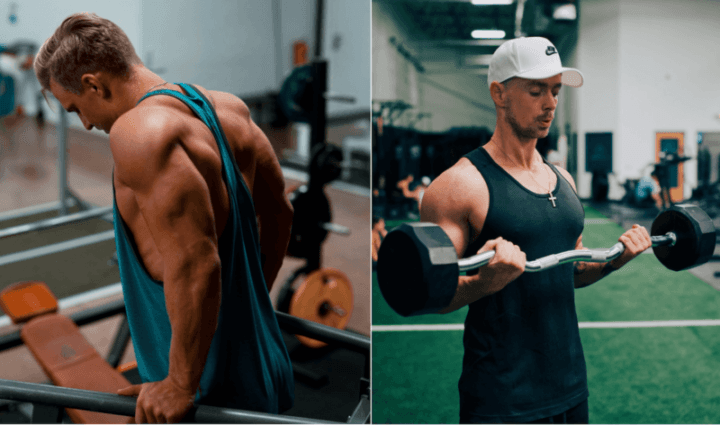
The compound vs. isolation debate is one of fitness's oldest arguments, and the answer is simple: you need both. Compound exercises form the foundation of any serious training program, while isolation exercises fill in the gaps and bring up lagging body parts. Understanding when to use each is the key to efficient programming.
What Are Compound Exercises?
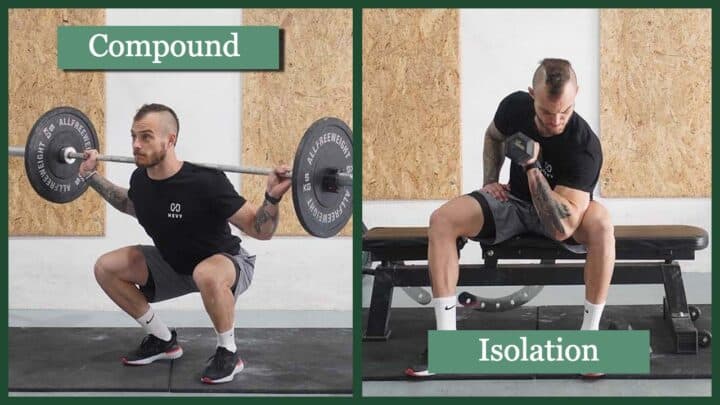
Compound exercises involve multiple joints and muscle groups working together. Squats (hips and knees), bench press (shoulders and elbows), and deadlifts (hips, knees, and spine) are classic examples. They allow you to lift the most weight and provide the greatest overall muscle stimulus per exercise.
What Are Isolation Exercises?
Isolation exercises target a single muscle group through a single joint. Bicep curls (elbow only), lateral raises (shoulder only), and leg curls (knee only) are examples. They allow you to focus on specific muscles that may not receive enough stimulus from compounds alone.
When to Prioritize Compounds
Beginning of your workout: Compounds demand the most energy and technique. Do them first when you're freshest.
As a beginner: New lifters get more value from compounds because they train multiple muscles simultaneously, making workouts more efficient.
For strength goals: Maximum strength is built through heavy compounds. You can't build a massive squat with leg extensions alone.
When to Prioritize Isolation
Targeting lagging muscles: If your shoulders are small despite heavy pressing, adding lateral raises (isolation) solves the problem.
Working around injuries: Isolation exercises let you train around an injury by loading muscles without stressing the injured joint.
At the end of your workout: After compounds fatigue your muscles, isolation exercises finish off specific areas.
The Ideal Balance
For most lifters, a workout should be 60-70% compound movements and 30-40% isolation work. Start with compounds for 3-4 exercises, then add 2-3 isolation exercises to target any under-stimulated muscles.
Exercise Selection on FitWit AI
FitWit AI balances compound and isolation movements in every workout. It selects isolation exercises based on which muscles need more volume beyond what your compounds provide.