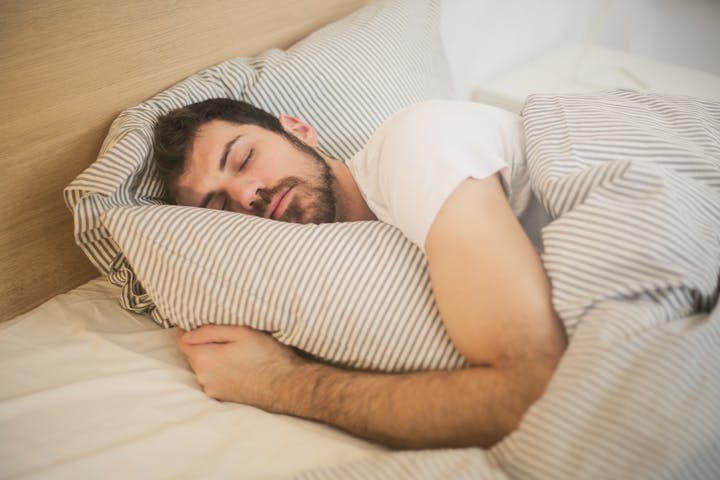
You spend hours researching the perfect program and meal plan. You hit the gym consistently. You take your supplements. But if you're sleeping 5-6 hours a night, you're sabotaging all of it.
The Hormonal Case for Sleep
Growth hormone: Up to 75% of your daily growth hormone is released during deep sleep. This hormone drives muscle protein synthesis, fat metabolism, and tissue repair. Cut sleep short and you slash your body's primary anabolic hormone.
Testosterone: Studies show that sleeping 5 hours instead of 8 reduces testosterone levels by 10-15%. Over months of training, this hormonal deficit meaningfully impacts muscle growth, strength gains, and recovery speed.
Cortisol: Sleep deprivation elevates cortisol, the stress hormone that promotes muscle breakdown and fat storage. Chronically elevated cortisol directly opposes your training goals.
What Happens During Sleep
Your body doesn't just rest during sleep. It actively rebuilds.
Stage 3 (Deep Sleep): This is when the majority of physical recovery occurs. Blood flow to muscles increases, growth hormone surges, and damaged muscle fibers from training are repaired and reinforced.
REM Sleep: This is when your brain consolidates motor patterns learned during training. The movement skills you practiced, proper squat form, bench press bar path, are literally being wired into your neural circuits while you dream.
Immune Function: Sleep deprivation suppresses immune function. When your immune system is compromised, the inflammatory response needed for muscle repair becomes dysregulated. You get more sore, recover slower, and get sick more often.
How Much Sleep Do You Need
Minimum for active individuals: 7 hours. Below this, measurable performance decrements appear in strength, power, and endurance.
Optimal for muscle growth: 8-9 hours. This allows full cycling through all sleep stages multiple times, maximizing growth hormone release and recovery.
Elite athletes often sleep 9-10 hours. LeBron James sleeps 12 hours. Roger Federer slept 11-12 hours during his career. These aren't lazy people. They understand that sleep is when adaptation happens.
Practical Sleep Improvement Tips
Fix your schedule first: Go to bed and wake up at the same time every day, including weekends. Consistency in sleep timing is more important than total hours. Your circadian rhythm needs predictability.
Create a cool, dark cave: Optimal sleep temperature is 65-68°F (18-20°C). Use blackout curtains. Even small amounts of light reduce melatonin production and disrupt deep sleep cycles.
Cut screens 60 minutes before bed: Blue light from phones and laptops suppresses melatonin. If you must use devices, enable night mode and reduce brightness. Better yet, read a physical book.
Watch caffeine timing: Caffeine has a half-life of 5-6 hours. Your 2pm coffee still has half its caffeine in your system at 8pm. Set a personal caffeine cutoff of noon or 1pm.
Don't train too late: Intense exercise within 2-3 hours of bedtime elevates core temperature and adrenaline, making it harder to fall asleep. If evening training is your only option, prioritize a cool-down routine and lower the intensity.
The Sleep-Training Feedback Loop
Better sleep improves training performance. Better training improves sleep quality. This positive feedback loop is one of the most powerful forces in fitness. Start with sleep, and watch everything else improve.
FitWit AI schedules your training to complement your daily rhythm and tracks your recovery. When you combine smart programming with quality sleep, the results compound faster than you'd expect.