The pull-up is the single best upper body exercise for building a wide, V-shaped back. It requires nothing but a bar and develops your lats, biceps, forearms, and core simultaneously. By varying your grip width, hand position, and tempo, you can target different muscles and keep progressing for years.
Pull-Up Variations from Beginner to Advanced
Dead Hang (Beginner): Simply hanging from the bar builds grip strength and shoulder stability. Hold for 20-30 seconds and work up to 60 seconds.
Negative Pull-Ups (Beginner): Jump to the top position and lower yourself as slowly as possible (5-10 seconds). Builds strength in the lowering phase.
Band-Assisted Pull-Ups (Beginner-Intermediate): Loop a resistance band around the bar and place your knee in it. The band reduces the load, making pull-ups accessible.
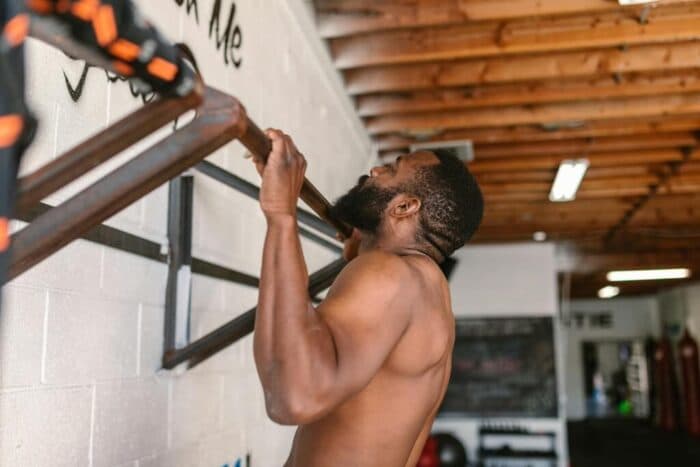
Standard Pull-Ups (Intermediate): Overhand grip, shoulder width. The baseline variation that develops lat width and overall pulling strength.
Chin-Ups (Intermediate): Underhand grip. Increased bicep involvement and most people can do more reps compared to overhand pull-ups.
Wide-Grip Pull-Ups (Intermediate): Grip wider than shoulder width. Emphasizes the outer lats for maximum width development.
Close-Grip Pull-Ups (Intermediate): Hands 6-8 inches apart. Shifts emphasis to the lower lats and increases bicep involvement.
Weighted Pull-Ups (Advanced): Add weight via a dip belt or dumbbell between your feet. The primary progression method for building serious back mass.
L-Sit Pull-Ups (Advanced): Hold your legs parallel to the floor while pulling up. Brutal core activation combined with pulling strength.
Muscle-Ups (Advanced): Pull yourself up and transition over the bar. The ultimate upper body calisthenics movement.
Pull-Up Programming on FitWit AI
FitWit AI assesses your current pull-up ability and programs the right variations and progressions to systematically build your pulling strength — from your first assisted pull-up to heavy weighted sets.