Well-developed shoulders are the cornerstone of an impressive physique. They create the illusion of a wider frame, improve your V-taper, and contribute to nearly every upper body pressing and pulling movement. But building truly complete shoulders requires targeting all three deltoid heads with specific exercises — not just pressing overhead and calling it a day.
Anatomy: The Three Deltoid Heads
Anterior (front) deltoid: Involved in all pressing movements — bench press, overhead press, push-ups. Most lifters already have well-developed front delts from pressing volume.
Lateral (side) deltoid: Creates shoulder width and the rounded, capped look. Requires direct isolation work like lateral raises since compound movements don't adequately target it.
Posterior (rear) deltoid: The most neglected head. Essential for shoulder health, posture, and a balanced physique. Face pulls and reverse flyes are your friends here.
The Complete Shoulder Workout
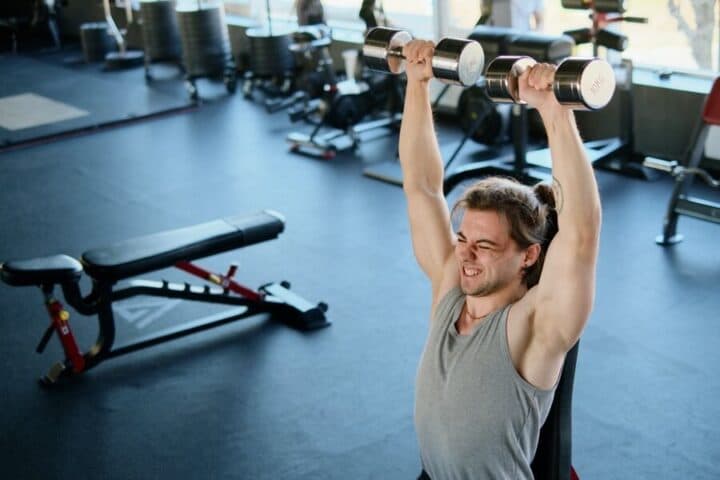
Seated Dumbbell Overhead Press (4x8-10): The foundation exercise. Pressing overhead heavily develops the front and lateral delts while building pressing strength.
Dumbbell Lateral Raises (4x12-15): The king of shoulder width. Use a controlled tempo, slight forward lean, and don't swing the weights. Go lighter than your ego wants.
Cable Face Pulls (3x15-20): Pull to your forehead with external rotation at the top. This builds rear delts and rotator cuff health simultaneously.
Rear Delt Flyes (3x15): Bent-over or machine-supported. High reps, strict form, and a squeeze at peak contraction.
Cable Lateral Raises (3x12-15): Cables provide constant tension throughout the range of motion, unlike dumbbells which lose tension at the bottom.
Programming Tips for Shoulders
Prioritize the lateral head: Front delts get plenty of work from bench pressing. Dedicate most of your direct shoulder volume to lateral and rear delt work.
Train rear delts as often as you train chest: This balances shoulder joint health and prevents the forward-hunched posture common in pressing-heavy programs.
Use higher reps for raises: The lateral and rear delts respond well to higher rep ranges (12-20). Heavy lateral raises invite cheating and reduce muscle activation.
Build Your Shoulder Plan with FitWit AI
FitWit AI analyzes your training split to ensure all three deltoid heads receive adequate volume. It prioritizes the heads most people undertrain and adjusts your shoulder work to complement your pressing volume from chest and arm days.