You finished a brutal leg day yesterday. Walking hurts. Stairs are your enemy. Your instinct says lie on the couch and don't move until Thursday. That instinct is wrong.
Active Recovery vs Passive Recovery
Passive recovery is doing nothing. Sitting, lying down, avoiding movement. It feels right when you're sore, but it often extends recovery time.
Active recovery is low-intensity movement that increases blood flow without creating additional muscle damage. It speeds up the removal of metabolic waste products from training and delivers fresh nutrients to recovering muscles.
Research consistently shows that active recovery reduces DOMS (delayed onset muscle soreness) more effectively than passive rest. One study found that 20 minutes of light cycling after intense leg training reduced soreness by 40% compared to complete rest.
What Counts as Active Recovery
The key word is light. Active recovery should feel easy. If you're breathing hard or creating any muscle soreness, you've gone too far.
Walking: 20-30 minutes at a comfortable pace. The simplest and most underrated recovery tool. Walking increases blood flow to the legs without loading them significantly.
Light cycling: 15-20 minutes at a conversational pace. Cycling is particularly effective for lower body recovery because it moves the joints through a full range of motion with minimal impact.
Swimming: Easy laps or treading water. The water provides gentle resistance in all directions while supporting your body weight. Excellent for full-body recovery.
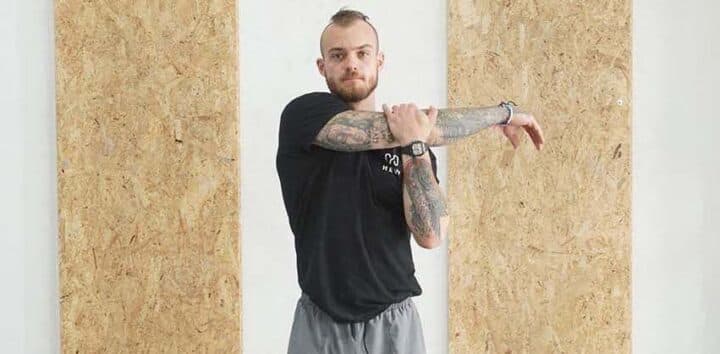
Yoga or mobility work: 20-30 minutes of gentle stretching and movement. Focus on areas that feel tight from training. Avoid deep stretches in muscles that are very sore, as they're still repairing.
Light resistance training: Some lifters do a recovery session with 30-40% of their normal weights for higher reps (15-20). This pumps blood into the muscles without causing additional damage.
How to Structure a Recovery Day
A good active recovery day might look like this:
Morning: 10-minute walk outside. Light exposure in the morning also helps regulate your circadian rhythm for better sleep.
Midday: 15-20 minutes of foam rolling and mobility work targeting tight areas from recent training sessions.
Afternoon/Evening: 20-30 minute easy walk, light bike ride, or gentle swim.
Total active time: 45-60 minutes of low-intensity movement spread throughout the day. This isn't a workout. It's movement for recovery.
When to Choose Full Rest Instead
Active recovery isn't always the answer. Some situations call for genuine rest.
After competition or max effort testing: When you've truly pushed to your limits, your nervous system needs complete rest, not just muscular recovery.
When you're getting sick: If you feel illness coming on, full rest supports immune function. Light exercise when you're fighting off a cold can extend the illness.
When you're mentally burnt out: If the thought of any physical activity creates stress or dread, take the day completely off. Mental recovery matters too.
If pain is sharp, not dull: DOMS is a dull, diffuse ache. Sharp, localized pain may indicate injury. Rest and assess before moving.
Make Recovery Non-Negotiable
Many dedicated lifters feel guilty about recovery days. They see rest as lost progress. The truth is the opposite. Recovery is when your muscles actually grow. Training provides the stimulus. Recovery provides the adaptation.
FitWit AI programs recovery days into your training schedule because they're as important as the hard sessions. Skip recovery, and you eventually hit a wall of fatigue, injury, or burnout. Honor it, and your training stays sustainable for years.